Kelly Poe
This past semester, I co-taught a class on “word and the photographic image” with photographer Barbara Bosworth. The course was wonderful, populated mostly by photography undergraduates, many of whom are also aspiring writers on the side.
We included more than a smattering of landscape work. And one student, a guy named Sean, was inspired by that work to write his final paper about the roles of beauty and language in landscape photography today. Sort of a lot to try to cover in a 15 page paper, but Sean has ambition.
Sean also has worries. He worries that beauty in a landscape photograph risks making the image part of the problem, rather than part of the solution in terms of the ways humans engage the rest of the natural world. And he worries that pictures without words might be too malleable in the meanings that can be imposed upon them. He cares as much about how people regard or disregard the physical world as he does about photography, and he wants to make sure his work–and work in general–doesn’t add harm to the world, particularly not inadvertantly.
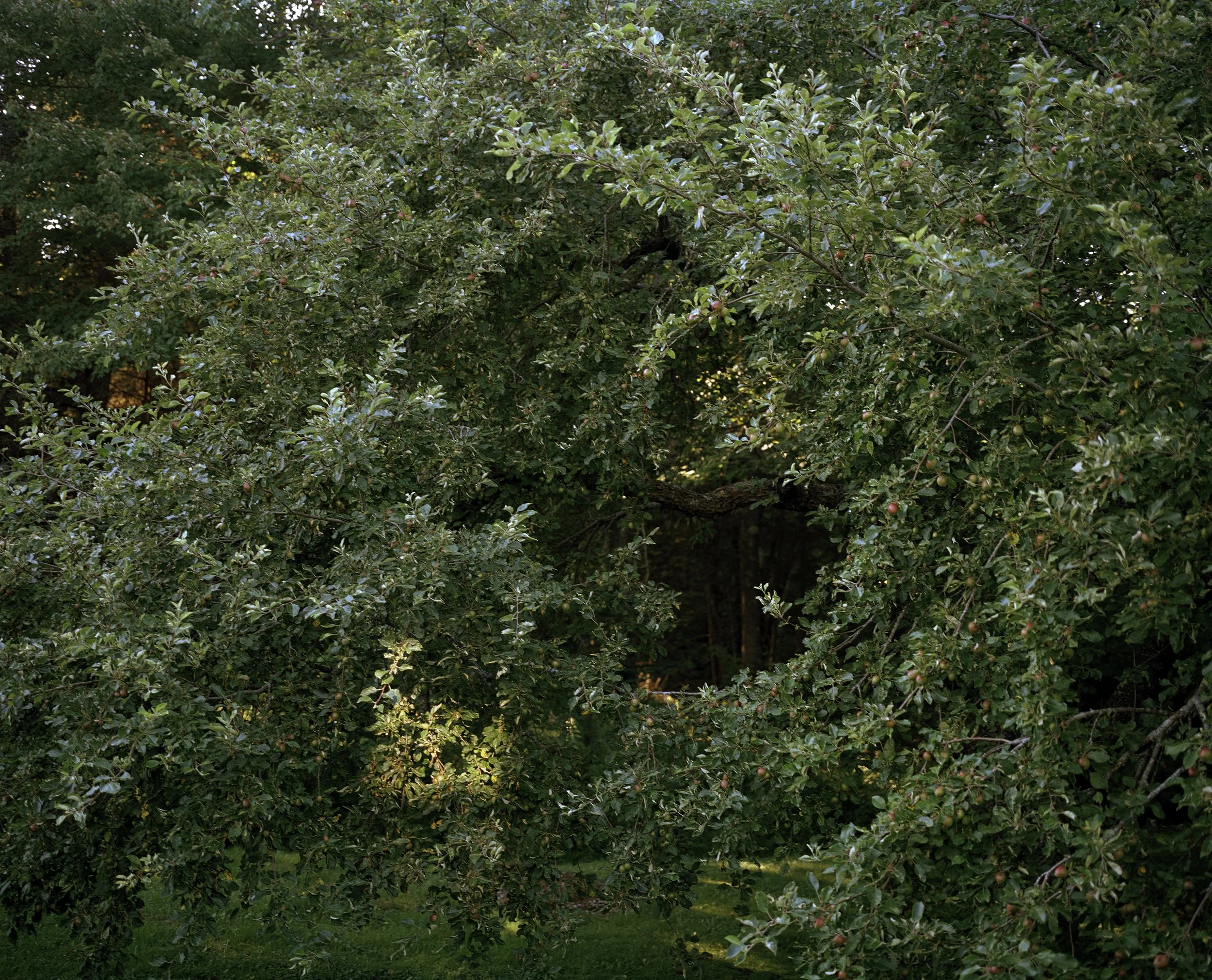
I wish I’d known about the work of artist Kelly Poe during the semester, for it would have been a wonderful touchstone for a conversation about these issues. Her recent project is described in the most recent issue of Aperture, in an article entitled “For the Wild.”
Apparently, environmental activists who break the law are classified as domestic terrorists. And in the beefing up of security after 9/11, the jail sentences for their legal infractions also got beefed up. A lot. For this project, Poe began corresponding with some of these folks, people serving multi-year sentences, and offered to be their eyes outside–to go to the natural places that the activists held close to their hearts, the kind of places they fought to protect, and to make photographs. When they told Poe their important places, she’d go and make a bunch of photos with a small camera, and send them to the prisoners–who then selected the one that best matched their remembered sense of the place. Then, Poe went back to the spot and made a final version with an 8×10 view camera. These color images are then paired with facsimiles of portions of text from the correspondence Poe had with the person whose important place is represented.
I’m crazy about this project. I love the way that Poe combines layers of seeing, layers of activism, layers of collaboration. And I think it could (perhaps) go a ways toward persuading Sean that beauty can be a part of activist art.
In: Text · Tagged with: activism, art, collaboration, kelly poe
Subscribe to this blog (RSS)
on July 12, 2010 at 4:13 pm
Permalink
Hi Margot,
Susan Morgan forwarded your kind shout out and I agree it’s a shame the semester passed before the acquaintance from Aperture. It’s an inspiration for me to hear about Sean’s musings regarding the representation of landscape today, if only his dilemma were more contagious.
I like your blog too, the dandelion oil sounds marvelous!
Yours,
Kelly Poe