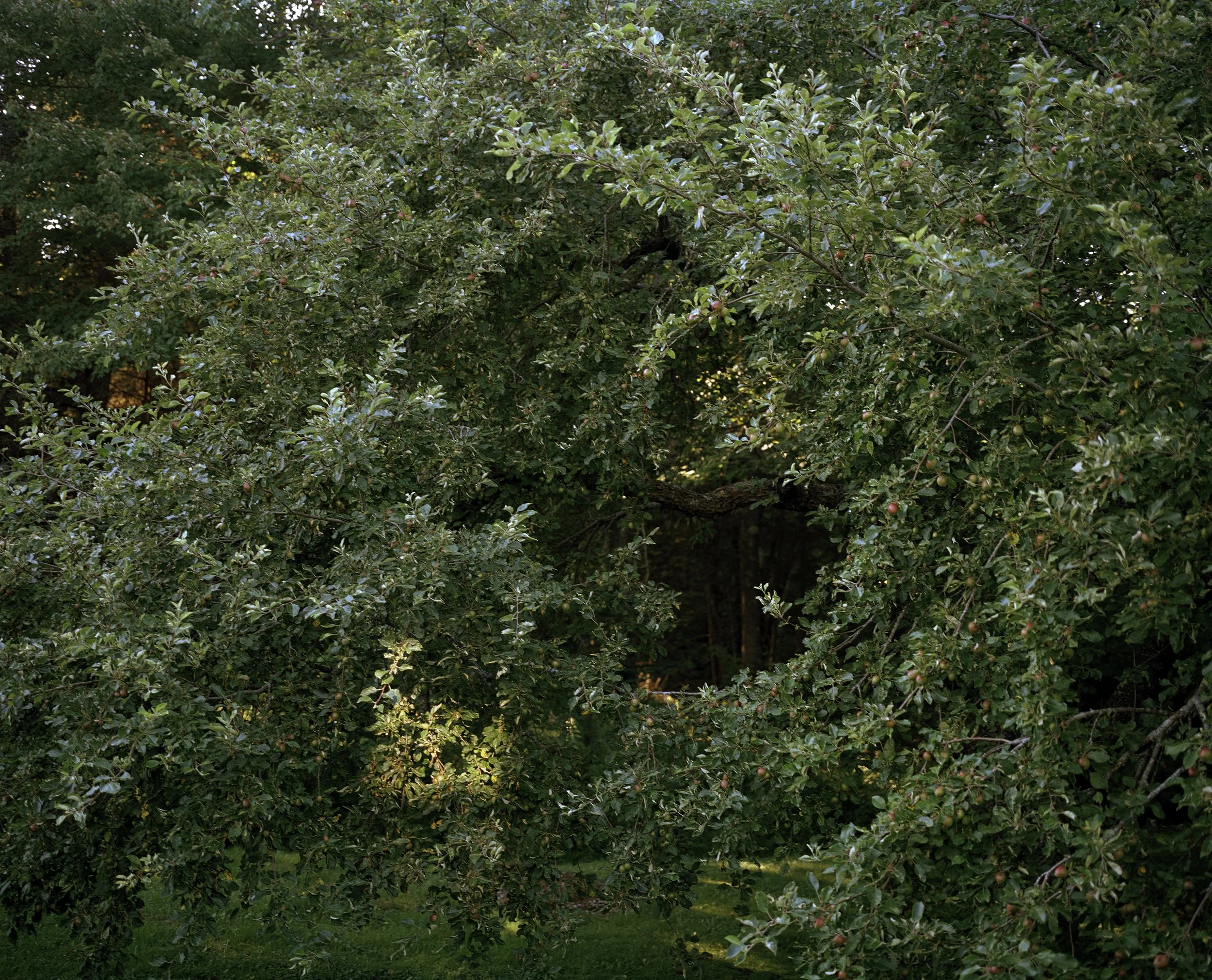
A Field Guide to Other People’s Trees

Here are a few pages from my folio “A Field Guide to Other People’s Trees.” Each page is 13 x 18 in the folio form, so you’ll probably want to reduce them a bit to read on screen.

And here’s a statement about the project:

For ten years, my husband and I have lived on the St. George peninsula in Maine.  Although our yard is not large, it is home to many species of plants and animals, including at least 150 trees of varying sizes and ages.  This lushness is especially significant because during the eighteenth and nineteenth centuries, the area was deforested—the tall, straight pines and firs felled for home building and shipbuilding.  When I look around our yard now, and see the wide assortment of trees, I also see the resilience of nature and the commitments of people.  In order for trees to survive, every human caretaker of a place—in this case, every former owner of our house—had to honor her predecessors’ choice and let the trees stand.

In 2006, I asked an arborist to determine the ages of our trees and tell me about the few unusual species.  I wanted to know the ages because I wanted to figure out which of the former residents of our house had planted each one.  I imagined that knowing more about the trees and the former inhabitants of the house would help me better know this place we had all participated in creating.  Exploring the yard led me to learn how naive that notion had been.

It also led me to learn what every backyard naturalist cannot help but know:  though I may focus mostly on trees, the living world is not composed of easily separated parts.  Rather, the birds and bugs and bacteria, the plants and people, are inextricably intertwined with those trees and with one another, all of us connected in unexpected and exciting ways.